
Rosacea
Previously called acne rosacea, this condition is now generally called rosacea because it is not acne. It is often seen at ages 30–50, particularly in people with fair skin. It is more common in women, but men may be more likely to have severe symptoms.
Skin features and triggers
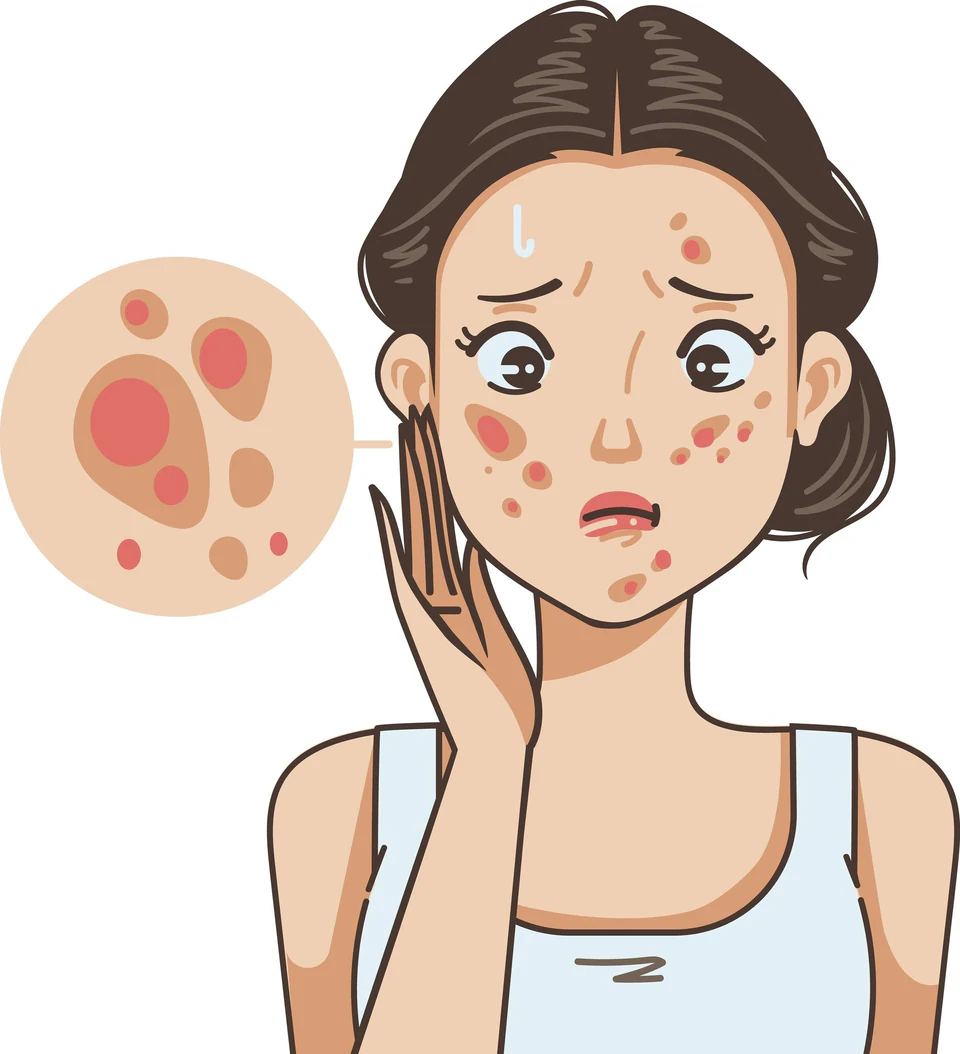
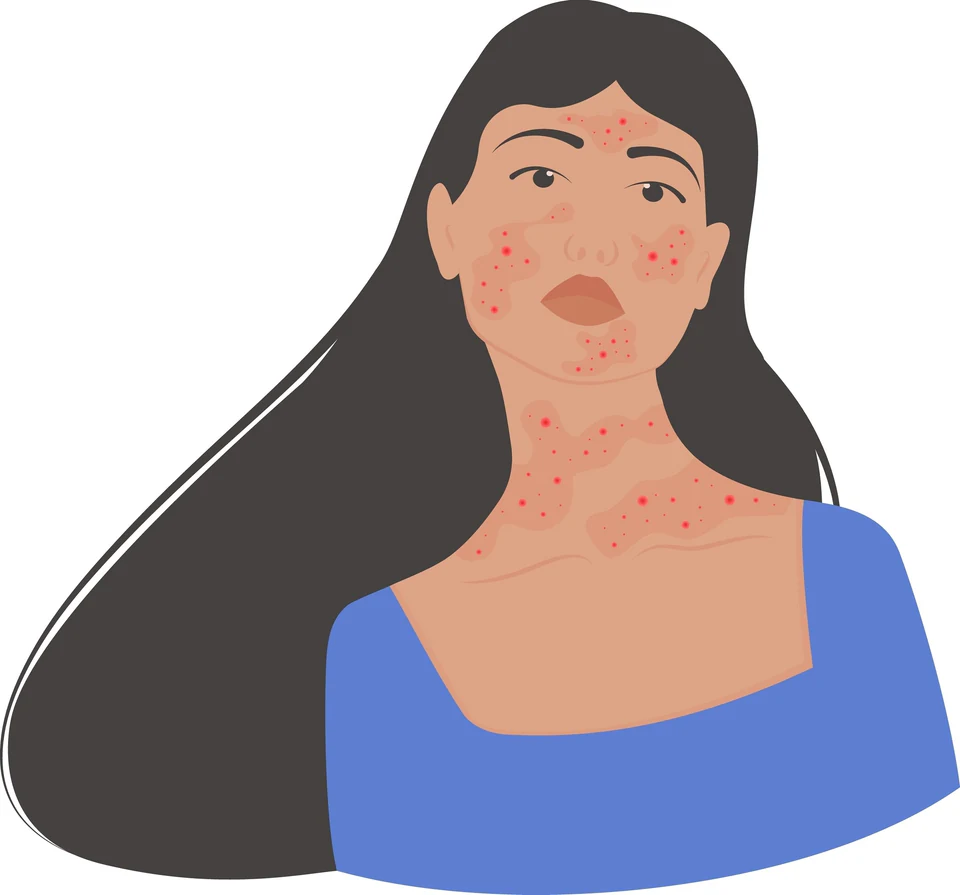
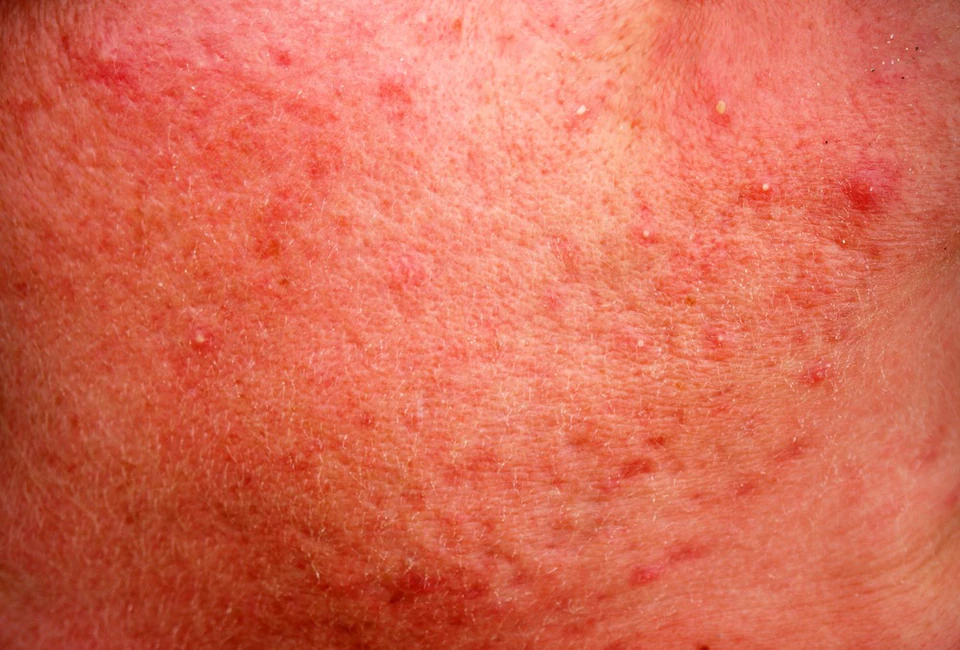
Red, swollen patches may occur with small red papules and pustules. Enlarged small blood vessels can appear on the cheeks, forehead, chin and nose. The neck and upper chest may also be involved. Acne-like lesions can occur, but whiteheads and blackheads are absent.
Alcohol, tea and coffee may aggravate facial redness. Heat from tea or coffee may be more relevant than the drink itself, so hot drinks can trigger symptoms. People with more marked disease may have a red nose with bumps. Long-standing changes can enlarge the nose, a condition called rhinophyma. An older informal name is W. C. Fields’ nose, after the late American comedian who had this condition.
Eye symptoms and inflammation
It has been reported that around half of people with rosacea have burning or irritated eyes associated with conjunctivitis. Inadequately treated eye involvement can damage the cornea. Research has reported increased levels of cathelicidin and stratum corneum tryptic enzymes, or SCTEs.
Treatment
Treatment depends on the pattern of symptoms. A physician may consider topical metronidazole, azelaic acid or ivermectin, and an oral medicine such as doxycycline in some cases. Medicine choice and dosage require medical assessment. Do not use steroid creams on the face without medical advice. Tell the physician about any eye symptoms.
Care advice includes avoiding smoking, alcohol, very spicy or heavily seasoned food, sunlight and extreme heat or cold. Strong steroid creams should not be applied because they can further enlarge visible blood vessels.
Article images
References
The information on this website is for educational purposes only and is not a substitute for diagnosis or treatment by a physician. If you have symptoms or questions about a skin condition, please consult a dermatologist. Contact Asoke Skin Hospital at asokeskin.com
Medical disclaimer