
Malassezia folliculitis
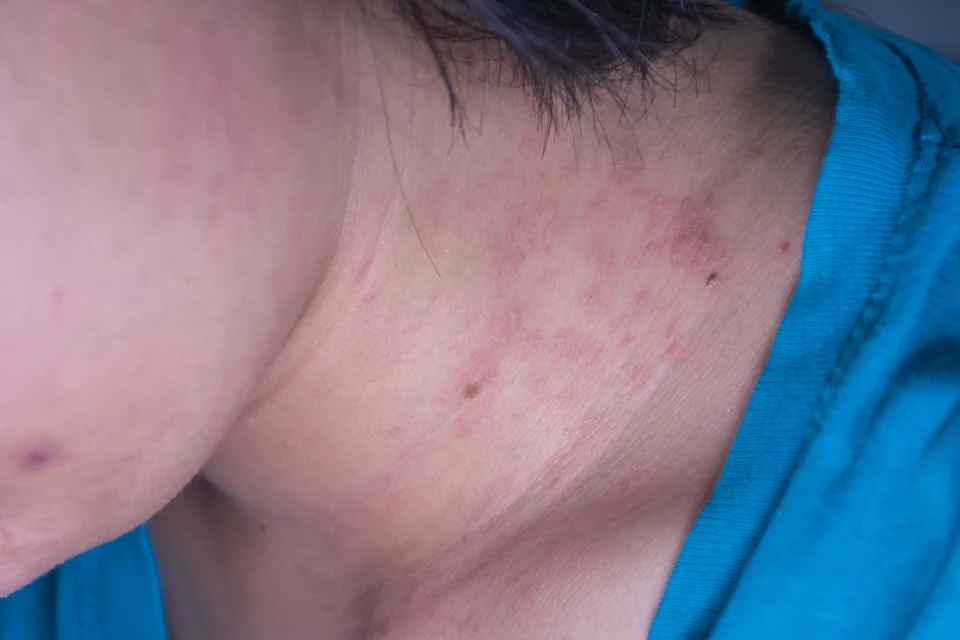
Also called pityrosporon folliculitis, this condition can produce red follicular bumps about 2–4 mm in diameter, sometimes topped by a small pustule. Lesions occur in areas where Malassezia is abundant: the chest, upper back, upper arms, scalp and neck. The face is less commonly affected.
Reports describe white or blue follicular fluorescence with a Wood lamp. Itching is common, unlike ordinary acne, which is usually less itchy. The upper trunk is often affected in early to middle adulthood, and ordinary acne treatment may not help much.
Yeast and similar-looking conditions
This condition involves Malassezia furfur, a yeast also associated with pityriasis versicolor, within follicles. Antifungal treatment may be needed alongside treatment for any coexisting acne. Although it can resemble acne vulgaris, comedones and cysts are absent. Conditions such as seborrheic dermatitis, confluent and reticulated papillomatosis, or systemic candidiasis may coexist.
Contributing factors
Contributing factors include diabetes, Cushing disease, Hodgkin disease, HIV infection, Down syndrome and immunosuppressive medicines. Pregnancy, antibiotics, anticonvulsants, hot and humid conditions, moisturizers, oils, sunscreen and thick clothing can also contribute to conditions in which follicles remain warm, moist and poorly ventilated.
Diagnosis
Diagnosis is based on the clinical appearance. A potassium hydroxide, or KOH, preparation may help confirm it; culture is not routinely necessary.
Treatment
A physician should confirm the diagnosis first. Options may include topical antifungals such as ketoconazole cream or shampoo, ciclopiroxolamine cream, econazole cream or selenium sulfide shampoo. Some people may need oral itraconazole or fluconazole after medical assessment.
Do not use oral ketoconazole to treat the skin on your own because of serious liver risks and interactions with other medicines. If you are taking an antibiotic, discuss its necessity with the prescriber: antibiotics do not treat yeast and may alter the balance of organisms on the skin.
Article images
References
The information on this website is for educational purposes only and is not a substitute for diagnosis or treatment by a physician. If you have symptoms or questions about a skin condition, please consult a dermatologist. Contact Asoke Skin Hospital at asokeskin.com
Medical disclaimer