
Occupational acne
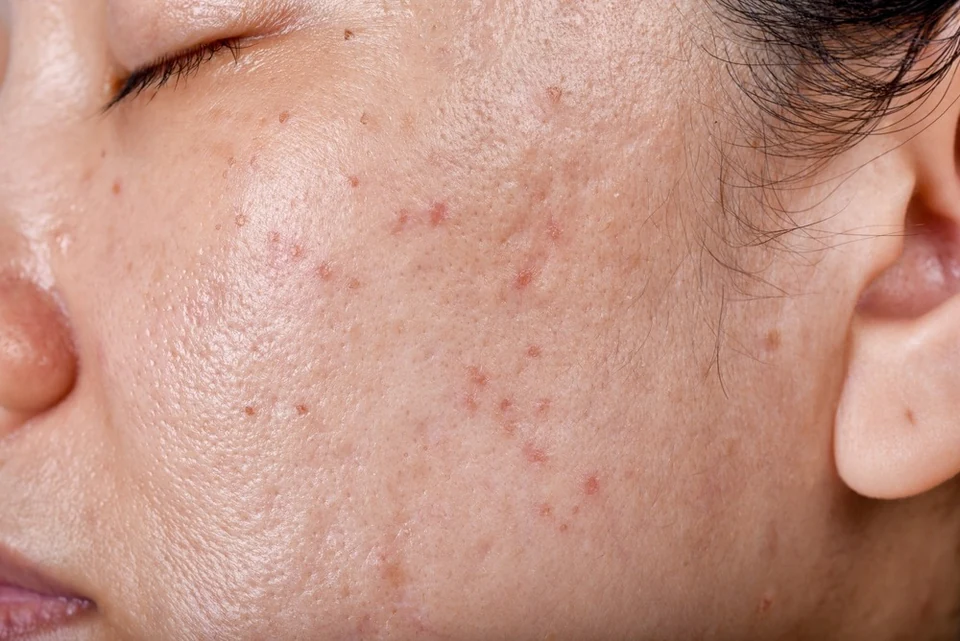
Occupational acne involves inflammation of skin sebaceous glands when certain workplace chemicals block follicles. Three groups are described here.
1. Oil acne
This is associated with petroleum and its derivatives. Lesions occur on the arms, hands, abdomen and thighs. Medical assessment is needed because lesions may remain for months even after exposure has stopped. Exposed skin may become darker and more sensitive to light, and skin cancer may subsequently occur.
2. Coal-tar acne
This is associated with products containing coal tar. Lesions commonly appear as black plugs around the eyes. Acne may clear relatively quickly after exposure stops, but in some people it persists, with darker skin, burning discomfort and flushing on sunlight exposure. Skin cancer may subsequently occur.
3. Chloracne
Chloracne follows exposure to halogenated aromatic compounds. Lesions include yellow cysts and yellow cysts with gray plugs. The face is commonly affected. Severe disease may involve the shoulders, chest, back, abdomen, arms, thighs, lower legs, hands and feet.
Exposure is usually through direct skin contact, but ingestion and inhalation can also occur. Lesions can develop three to four weeks after exposure and may remain for as long as 15 years after exposure stops. Other reported abnormalities include liver disease, bronchitis, nausea, vomiting, diarrhea, headache, fatigue, restlessness, sweaty palms and numbness in the legs. Former Ukrainian president Viktor Yushchenko is a historical example of chloracne following dioxin poisoning.
Article images
References
The information on this website is for educational purposes only and is not a substitute for diagnosis or treatment by a physician. If you have symptoms or questions about a skin condition, please consult a dermatologist. Contact Asoke Skin Hospital at asokeskin.com
Medical disclaimer